
Immersive Technologies: VR, AR, and Interactive Experiences
- Défi Dékip

- il y a 6 jours
- 2 min de lecture
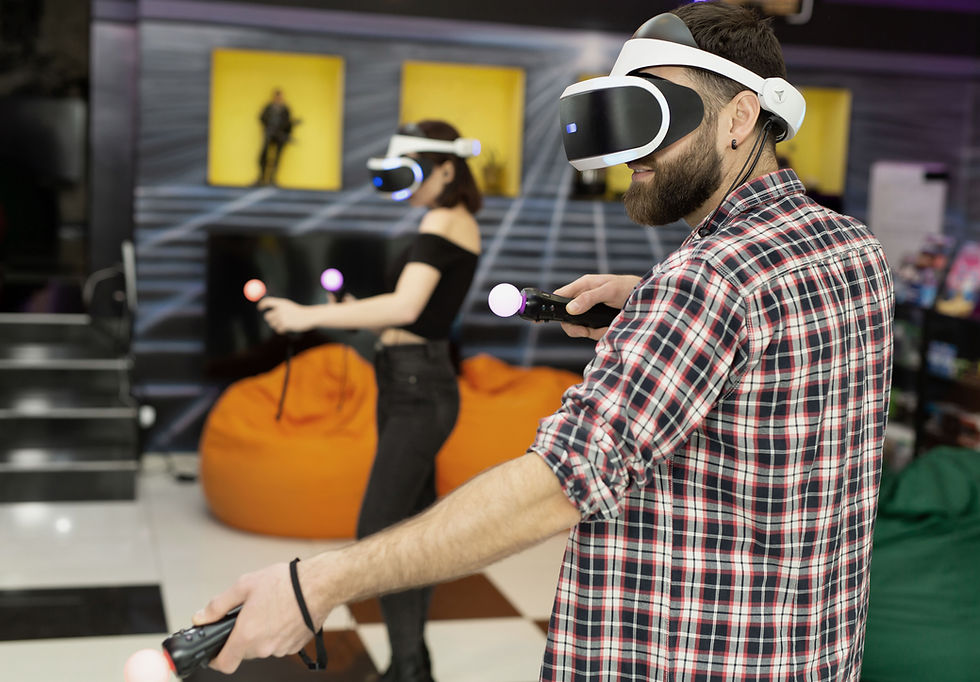
Immersive technologies are redefining the event industry. Virtual reality (VR), augmented reality (AR), and interactive digital experiences have expanded far beyond entertainment—they now play a central role in delivering innovative, memorable, and high-impact events.
1. Virtual Reality: Full immersion
VR transports attendees into fully digital environments where creativity has no limits.Event applications include:
virtual venue tours,
immersive product demos,
realistic simulations,
multisensory experiences.
VR is increasingly used for product launches, trade shows, training sessions, and brand activations.
2. Augmented Reality: Enhancing the real world
AR overlays digital elements onto the physical world through smartphones, tablets, or AR glasses.Its uses include:
smart event signage,
gamified attendee journeys,
interactive filters,
3D product visualization.
AR adds a dynamic, fun, and informative layer to in-person events without requiring heavy hardware.
3. Interactive experiences: Turning attendees into participants
Beyond VR and AR, interactive experiences encompass:
motion-tracking systems,
giant touchscreen walls,
video mapping,
collaborative installations,
connected games.
They boost engagement and transform attendees into active contributors, making events more memorable and shareable.
4. Strong value for brands
Brands adopt immersive technologies to:
modernize their image,
stand out from competitors,
create impactful storytelling,
collect valuable engagement data.
These experiences generate strong emotional connections and amplify event visibility.
5. Increasing accessibility
Immersive technologies are becoming more affordable.Devices are lighter, platforms easier to use, and production costs gradually decreasing.This democratization allows events of all sizes to integrate immersive elements.
6. Challenges to consider
Despite their advantages, several challenges remain:
need for technical expertise,
risk of overuse or tech overload,
importance of narrative coherence,
real-time maintenance requirements.
Immersive tools must enhance—not overshadow—the event’s purpose.
In summary:
VR, AR, and interactive technologies are transforming the event landscape by enabling innovative, engaging, and deeply memorable experiences. As they become more accessible, they establish themselves as essential components of modern events.